Bexley's leafy streets and suburban calm have provided the backdrop for some of Britain's most celebrated creative talents. From the world's best-selling children's author to a pioneering art-rock musician, the London borough has quietly nurtured a remarkable concentration of artistic genius.
Roald Dahl's Formative Years on Hurst Road
Long before he became one of the world's most beloved children's authors, Roald Dahl spent seven formative years living in Bexley. Between 1927 and 1934, Dahl and his family resided at Oakwood, a house on Hurst Road in Bexley, when he was not away at boarding school.
Dahl was eleven years old when he moved to the property. He would remain there until the age of eighteen, a period that spanned his time at Repton School in Derbyshire, where he boarded from 1929 to 1934. This Bexley residence came after his earlier education at St Peter's boarding school in Weston-super-Mare.
Born in Cardiff in 1916 to Norwegian parents, Dahl's time in Bexley represented a significant chapter in his youth. The period coincided with his adolescence and the experiences that would later inform his writing. Unlike the more famous Gipsy House in Great Missenden, Buckinghamshire, where he lived from 1954 until his death in 1990, the Hurst Road property remains relatively unmarked by literary tourism.
Kate Bush's East Wickham Beginnings
Kate Bush, the groundbreaking singer-songwriter who revolutionised British pop music, entered the world in Bexleyheath on 30 July 1958. She was born at Bexley Maternity Hospital, beginning a childhood spent at East Wickham farmhouse on Wickham Street in Welling.
The farmhouse, a former agricultural property dating back more than 350 years, provided an unconventional setting for Bush's upbringing. East Wickham, a district within the London Borough of Bexley situated north of Welling, offered a semi-rural environment that contrasted with the concrete landscape of many London suburbs.
Bush attended St Joseph's Convent Grammar School, a Catholic girls' school in nearby Abbey Wood. Raised in a musical Roman Catholic household, her mother was an amateur Irish dancer and her father an amateur pianist. Her brothers became involved in the folk music scene, providing the environment that would eventually lead to her discovery by David Gilmour of Pink Floyd and her subsequent rise to stardom.
The Arts and Crafts Legacy at Red House
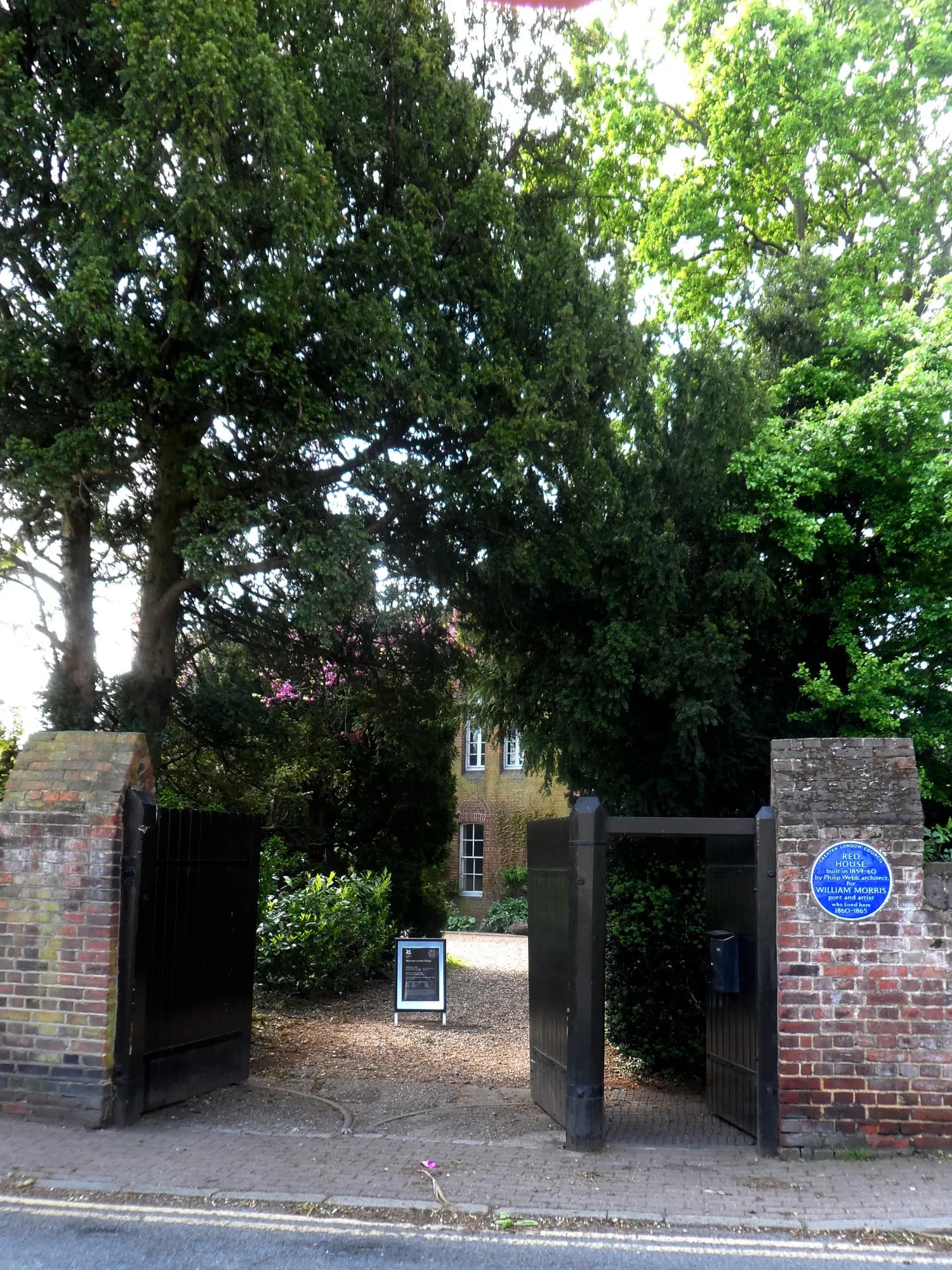
Bexley's creative pedigree extends far beyond Dahl and Bush. William Morris, the influential textile designer, poet and socialist activist, lived at Red House in Bexleyheath from 1860 to 1865. Built for him by architect Philip Webb between 1859 and 1860, the property served as a retreat when Bexleyheath was still largely countryside.
The house, now managed by the National Trust, bears an English Heritage blue plaque erected in 1969. Morris's time in Bexleyheath proved instrumental in the development of the Arts and Crafts Movement, with Red House serving as a gathering place for like-minded artists and thinkers.
Hall Caine, the popular Victorian novelist, lived next door at Aberleigh Lodge on Bexleyheath between 1884 and 1889. The property has since been demolished, though its literary associations remain part of the area's heritage.
Literary Ghosts and Aeronautical Tales
Algernon Blackwood, the acclaimed writer of supernatural and ghost stories, spent his childhood at Crayford Manor House between 1871 and 1880. The building provided the setting for early experiences that would later inform his tales of the uncanny.
Nevil Shute, the novelist and aeronautical engineer best known for works such as A Town Like Alice and On the Beach, lived on Hatherley Road in Sidcup during the late 1920s. At the time, he was working at Vickers in nearby Crayford, combining his dual careers in engineering and fiction.
Musical Connections and Artistic Cross-Pollination
The borough's musical heritage extends beyond Kate Bush. John Paul Jones, the bass guitarist and keyboardist for Led Zeppelin, was born in Sidcup. Ronnie Aldrich, the jazz pianist and band-leader, was born in Erith in 1916.
Quentin Blake, the illustrator whose distinctive drawings accompanied many of Roald Dahl's best-known books, was also born in Sidcup. He attended Chislehurst and Sidcup Grammar School, creating a curious local connection between the illustrator and the author who would later define his career, despite their age difference.
The Acting Tradition
Michael Gambon, the distinguished actor best known to younger audiences as Albus Dumbledore in the Harry Potter film series, lived on Hurstwood Road in North End, Bexley. He attended Crayford Secondary School before his celebrated career on stage and screen.
Sir Roger Moore, who would become internationally famous as James Bond, lived at St Mary's Mount on Wansunt Road in Bexley during his marriage to Welsh singer Dorothy Squires.
Comedy from Erith
Linda Smith, the comedian and radio presenter who became a fixture of BBC panel shows during the 1990s and 2000s, was born and raised in Erith. She attended Bexleyheath School before her career in stand-up comedy and broadcasting.
A Creative Cluster
The concentration of creative figures in Bexley raises questions about what drew them to, or kept them in, this corner of south-east London. For some, such as William Morris, the appeal lay in the semi-rural character of Bexleyheath in the nineteenth century. For others, including Roald Dahl's family, the spacious suburban properties offered room for large families.
The borough's educational institutions also played their part. From St Joseph's Convent Grammar School educating Kate Bush to Crayford Secondary School counting Michael Gambon among its alumni, local schools provided the foundation upon which these careers were built.
Today, visitors to Bexley can trace these connections through the built environment. Red House stands as the most prominent monument to the borough's creative heritage, but the streets of Bexleyheath, Welling, Sidcup and Erith contain the addresses where some of Britain's most significant cultural figures lived, worked and developed the talents that would eventually make them household names.