In 1884, an American inventor named Hiram Maxim arrived in Crayford and set in motion a transformation that would turn a quiet Kent village into one of Britain's most important centres for arms manufacturing and early aviation. Within thirty-five years, the facility he founded would employ 12,000 people and produce weapons and aircraft that shaped the course of two world wars.
The Inventor and His Arrival
Hiram Maxim was born on 5 February 1840 in Sangerville, Maine. By the early 1880s, he had already made his name as an inventor in the United States when he turned his attention to automatic firearms. In 1883, he developed the world's first fully automatic machine gun, and the following year he founded the Maxim Gun Company with financial backing from Edward Vickers of the Sheffield steel firm.
Maxim chose Crayford as the site for his new venture. He took up residence at Stoneyhurst, a property in the village, and established his factory there in 1884. The location offered good transport links and access to the engineering skills of south-east London and north Kent.
From Maxim Guns to Vickers
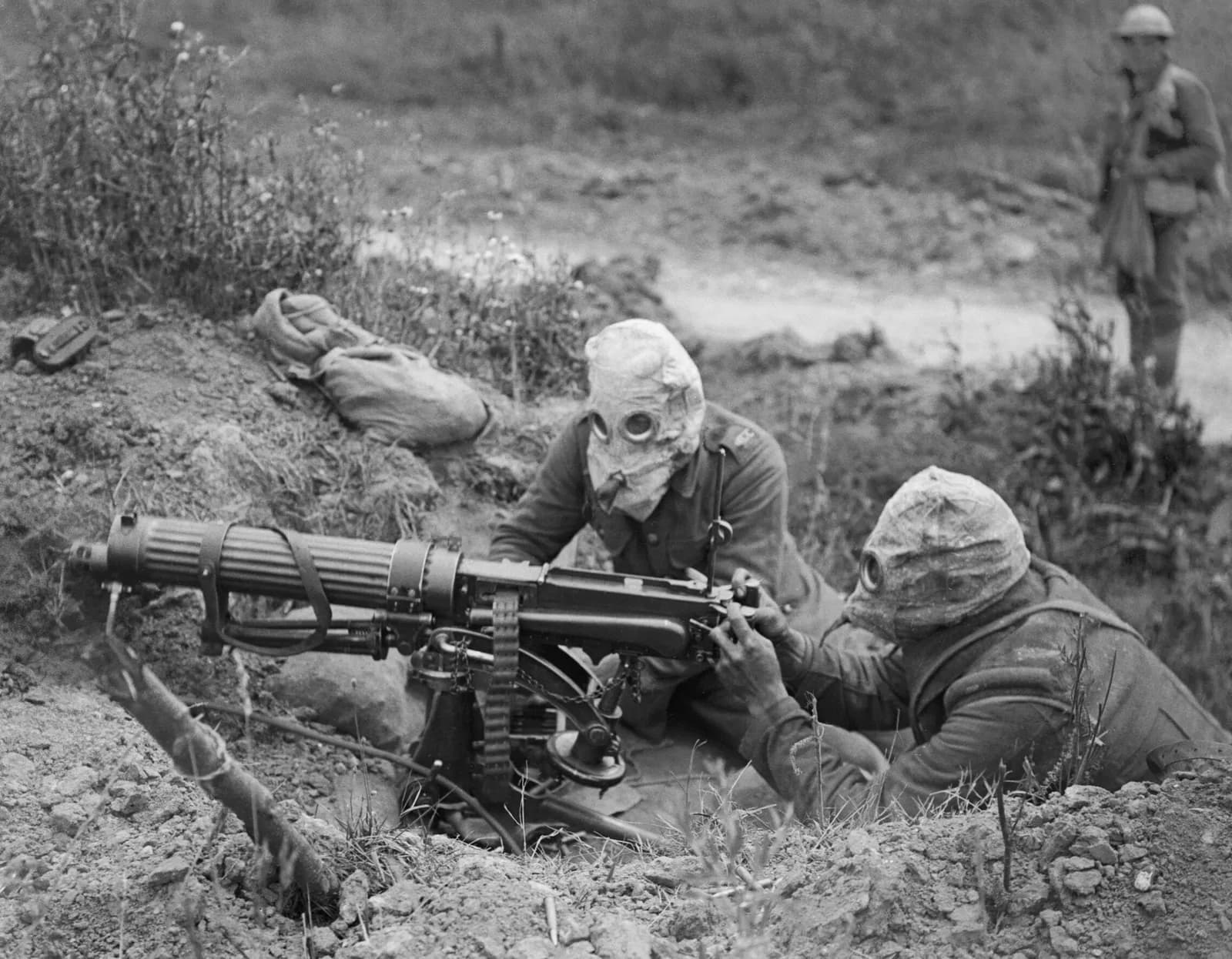
The Maxim Gun Company quickly established itself as a producer of revolutionary weaponry. The Maxim gun, which used the recoil energy from each shot to load the next round, could fire 600 rounds per minute; a rate unprecedented in the 1880s.
In 1888, under pressure from the financier Rothschild and Vickers, the Maxim Gun Company merged with the Nordenfelt Guns and Ammunition Company to form the Maxim Nordenfelt Guns and Ammunition Company. The Crayford works continued to manufacture Maxim guns and also began producing larger-calibre "pom-pom" guns.
Vickers acquired the Maxim Nordenfelt Company in 1896, and the following year purchased the Barrow Shipbuilding Company, changing the company's name to Vickers, Sons and Maxim. The Crayford facility was now part of one of Britain's largest industrial conglomerates.
The Boer War Boom
The years leading up to the turn of the century saw steady growth at Crayford, but it was the Second Boer War (1899-1902) that transformed the works into a major industrial operation. Vickers Crayford prospered manufacturing Maxim guns for the conflict, and the end of the war brought only a temporary decline in trade.
Between 1902 and 1910, the factory diversified into a new field: motor car manufacture. The works produced cars for the Siddeley Autocar Company, which were sold under the Wolseley name. This venture ended in 1910 when car manufacturing moved to Birmingham, but the experience would prove valuable in the years ahead.
The First World War: Peak Production
The outbreak of the First World War in 1914 transformed Crayford into a hive of industrial activity. Vickers employed 12,000 people at the works during the war; a figure that represented a massive influx of workers into the area.
The Barnes Cray Estate was built by an organisation connected with Vickers to house these workers. Vickers also built a theatre, which was named the Princesses Theatre after Geoffrey Whitworth, and a canteen close to the workshops. The canteen, built during the First World War, would later be converted for use by Crayford Urban District Council as Crayford Town Hall. The brick-faced building still stands today as a locally listed building.
The main function of Vickers Crayford Works during the war was the manufacture of the Vickers machine gun, a development of Maxim's original invention, and aircraft. The Vickers F.B.5 "Gunbus", the world's first purpose-built fighter aircraft, was manufactured at Crayford. Towards the end of the war, the works began producing larger aircraft such as the Vickers Vimy.
On 26 March 1918, the first production contract for 150 Vimy aircraft was issued, with these being built at Vickers' works in Crayford. By the end of 1918, 13 Vimy aircraft had been completed; seven at Crayford and six at Weybridge.
From Crayford to the Atlantic
The connection between Crayford and one of the most famous achievements in aviation history remains significant. The Vickers Vimy aircraft that made the first non-stop transatlantic flight in June 1919 was originally manufactured at Crayford.
Captain John Alcock and Lieutenant Arthur Whitten Brown took off from St John's, Newfoundland, on 14 June 1919, and landed in Clifden, Ireland, sixteen hours later. The Vimy they flew had originally been manufactured at Vickers in Crayford; the first twelve being made there and tested at Joyce Green airfield, Dartford.
The transatlantic flight made Alcock and Brown national heroes. They were surprise guests at the reopening of the Princesses Theatre by the Duke of York (later King George VI) in Crayford in July 1919. A sculpture of Alcock and Brown now stands near the location of the demolished Vickers factory in Crayford.
Post-War Adjustments
In 1919, aircraft production moved from Crayford to Weybridge, marking the end of the works' period as an aviation manufacturing centre. The workforce shrank to 3,500, and the factory turned to new products.
Crayford began making motorcar parts, and from 1921, sewing machines. The works also produced sporting guns and bottling machinery. By the 1970s, the bottling machinery business was the largest in the United Kingdom.
In 1927, Vickers merged with Armstrong Whitworth to form Vickers-Armstrongs. When the Erith works closed in 1931, its work was transferred to Crayford and Dartford.
The Vickers Legacy in Bexley
The impact of Vickers on Crayford and the wider Bexley area extended far beyond the factory walls. The company effectively created a company town, building not just factories but homes, leisure facilities, and infrastructure that shaped Crayford's development.
As one historical account notes, "with the re-opening of the works in 1912, and the increase in demand for weapons brought about by the First World War, Crayford was transformed in a way that made Vickers the most important firm ever to operate in the area."
The VCD Athletic Football Club, which competes in the Isthmian League Premier Division, takes its name from Vickers, Crayford and Dartford; a reminder of the company's central role in local life.
Hiram Maxim himself moved on from Crayford in 1889, but he continued his work in Britain. He became a naturalised British citizen on 16 September 1899 and was knighted by King Edward VII on 9 February 1901. He continued to experiment with powered flight, and in 1894 tested a 3.5-ton flying machine on a 1,800-foot rail track at Baldwyn's Park Mansion in Bexley. He died in Streatham on 24 November 1916, by which time the works he had founded in Crayford was producing the weapons and aircraft that would help Britain through the darkest days of the First World War.
Today, little remains of the vast Vickers works that once dominated Crayford. The Town Hall stands as the most visible reminder of an industrial enterprise that transformed a Kent village into an arms and aviation hub, and in doing so, shaped the lives of generations of Bexley residents.