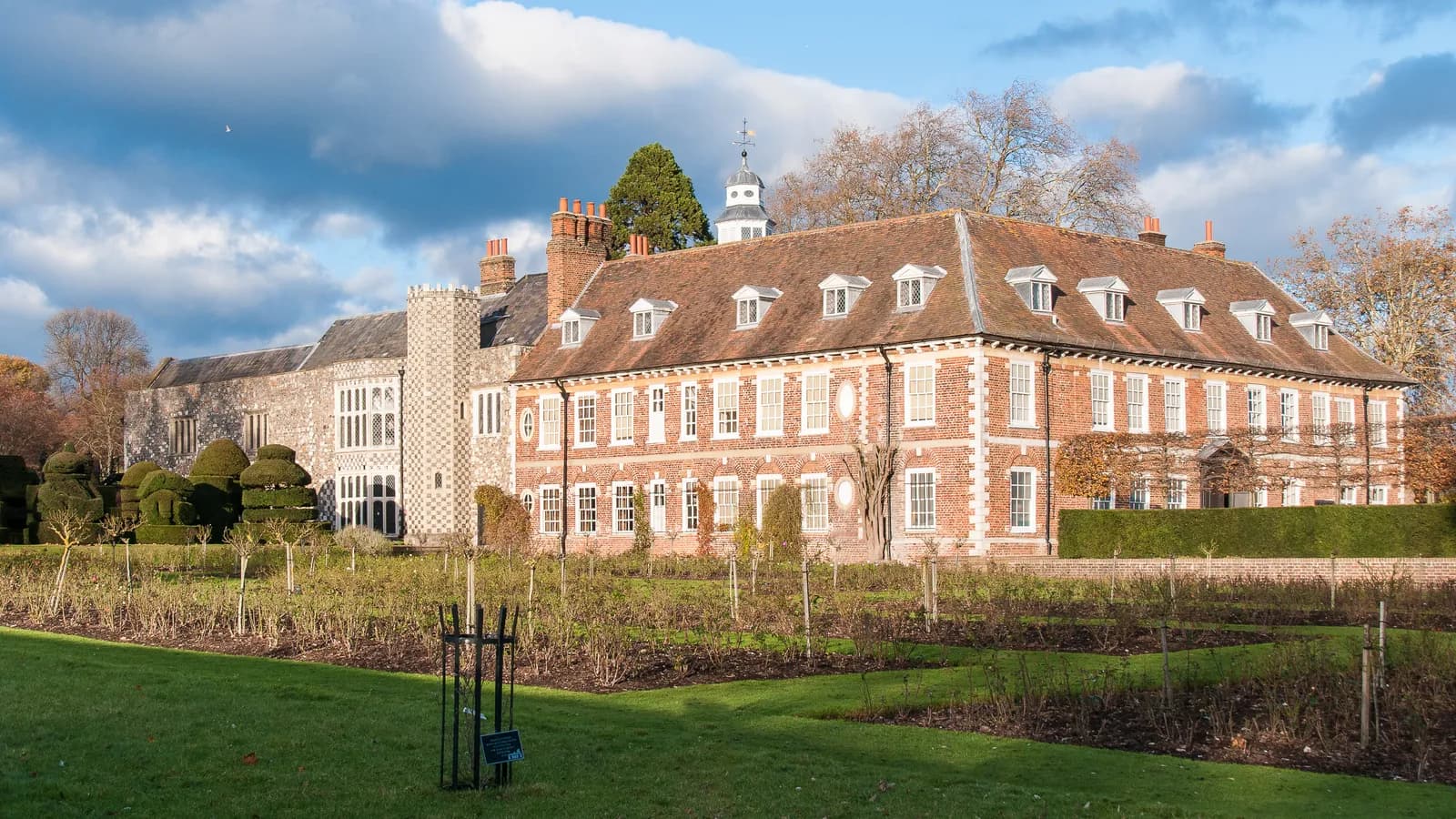
Standing on the marshlands of Abbey Wood at the eastern edge of the borough, Crossness Pumping Station appears unassuming from the outside. Yet behind its modest exterior lies what architectural historian Nikolaus Pevsner described as "a masterpiece of engineering; a Victorian cathedral of ironwork"; a building that played a decisive role in saving London from disease and decay.
The Crisis That Demanded a Solution
The summer of 1858 brought a crisis that would reshape the capital. As temperatures soared, the Thames; already choked with untreated human waste and industrial effluent; became unbearable. Members of Parliament soaked curtains in lime chloride to mask the stench. Prime Minister Benjamin Disraeli described the river as "a Stygian pool reeking with ineffable and intolerable horrors." The event became known as the Great Stink.
More than 30,000 Londoners had perished in successive cholera epidemics during the preceding decades. The city needed a solution, and it needed it urgently.
Bazalgette's Ambitious Vision
Sir Joseph Bazalgette, chief engineer of the Metropolitan Board of Works, proposed a radical answer: a vast network of interceptor sewers that would carry waste eastwards away from the city centre. The southern arm of this system would terminate at Crossness, where powerful steam engines would lift the effluent into the main outflow sewer, discharging it into the Thames at high tide when the flow would carry it seaward.
Construction began in 1859 and continued for six years. The station was designed by architect Charles Henry Driver in the Romanesque style, with doorways modelled on Norman cathedrals and carved capitals that include a portrait of Bazalgette himself. Builder William Webster oversaw the construction.
On 4 April 1865, the Prince of Wales (later Edward VII) officially opened the station in a ceremony attended by royalty, archbishops, and the Lord Mayor of London.
The Engines That Powered a Revolution
Inside the engine house, four massive beam engines named Victoria, Prince Consort, Albert Edward, and Alexandra dominate the space. Built by James Watt & Co. to Bazalgette's designs, these are thought to be the largest remaining rotative beam engines in the world. Each features a 52-ton flywheel and 47-ton beam.
At 11 revolutions per minute, each engine pumped six tons of sewage per stroke, raising it 30 to 40 feet into a 27-million-gallon reservoir. The station consumed 5,000 tons of Welsh coal annually to maintain operations.
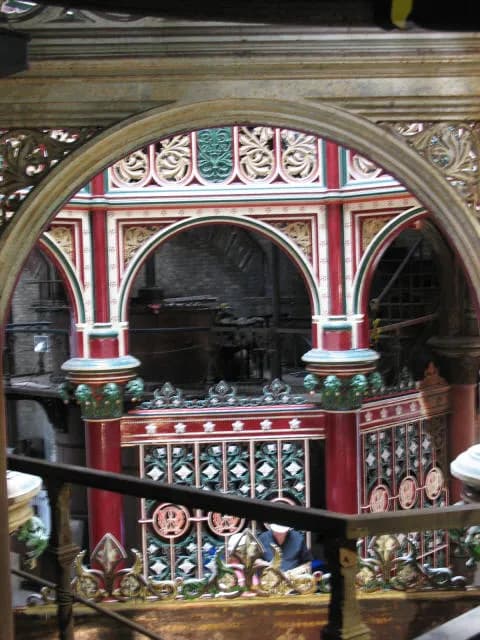
The interior astounds visitors with its blaze of polished brass, painted cast-iron columns, spiral staircases, and screens ornamented with intricate fig motifs. The "Octagon" room showcases particularly elaborate decorative ironwork, earning the building its cathedral-like reputation.
A Bexley Landmark with Lasting Impact
Located within the London Borough of Bexley at the eastern end of the Southern Outfall Sewer, Crossness Pumping Station served not only the capital but specifically the sanitation needs of South London, including the Bexley area.
Bazalgette's system brought an end to London's cholera outbreaks. The last epidemic struck in 1866, confined to an area not yet connected to the new sewers. The fundamental engineering remains in use today, a testament to Victorian ingenuity.
The station operated for nearly a century before decommissioning in 1956. Grade I listed since 1970 and placed on the Heritage at Risk Register, the building faced an uncertain future until salvation arrived through volunteer effort.
Restoration and Public Opening
The Crossness Engines Trust, a registered charity formed in 1987, has led a three-decade restoration effort. Heritage Lottery Fund grants totalling over £3 million, supplemented by funding from English Heritage, the Department for Communities and Local Government, and match funding from Bexley Council, have enabled extensive works.
The Prince Consort engine returned to working order in 2003 after 15 years of volunteer labour. The station opened to the public in 2016, featuring a museum exhibition, education room, archive, café, and improved car parking.
Peter Bazalgette, Sir Joseph's great-great-grandson and president of the Trust, noted: "The Trust's volunteers have worked tirelessly to restore one of the magnificent engines and to create an experience which visitors already enjoy."
Today, Crossness stands as both a working monument to Victorian engineering and a recognised Bexley visitor attraction. The adjacent Crossness Nature Reserve provides habitat for moths, amphibians, and water voles, offering additional interest for visitors to this remarkable corner of the borough.
Visitor Information
Crossness Pumping Station is located at Bazalgette Way, Abbey Wood, London SE2 9AQ. The site opens on selected days with volunteer-led tours available. Visitors should check the Crossness Engines Trust website for current opening times and booking details.