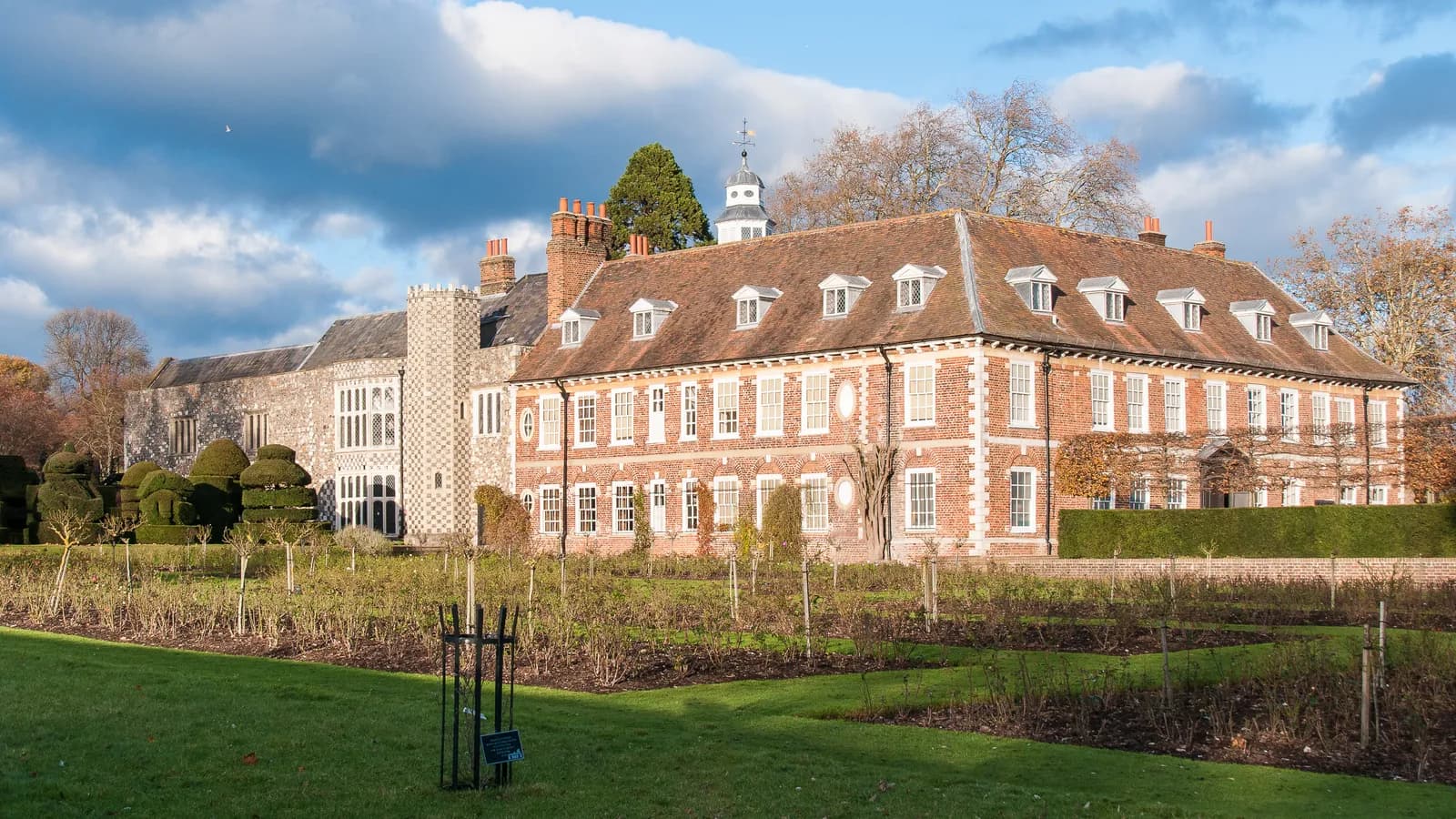
Hall Place, a Grade I listed Tudor mansion on Bourne Road in Bexley, played a secret but significant role in the Allied victory during the Second World War. From January 1944, the house became a covert signals intelligence station intercepting German military communications.
A Tudor Foundation
Sir John Champneys, a wealthy merchant and former Lord Mayor of the City of London, built Hall Place in 1537 using stone recycled from the nearby former Lesnes Abbey. The original stone structure stood until 1649, when Sir Robert Austen, another wealthy City merchant, purchased the estate and added a red-brick wing that doubled the house's size.
Operation Santa Fe
In January 1944, the U.S. Army's Signal Corps 6811th Signal Service Detachment arrived at Hall Place to operate a listening station code-named "Santa Fe." The facility was established, according to Hall Place's own historical records, in "a new spirit of co-operation between British and American intelligence services."
Hall Place operated as a Y Station, one of at least 178 such sites across Britain that intercepted enemy radio communications and fed them to codebreakers at Bletchley Park. The Bexley station specifically targeted encoded Morse signals from the German Air Force and Luftwaffe.
Wartime Adaptations
The mansion underwent rapid conversion for its new purpose. Radio aerial wires were strung across the rooftops. The Tudor Kitchen and Great Hall became "set rooms," filled with rows of radio receivers on wooden-plank tables. The Great Chamber served as soldiers' dormitory.
The intercepted messages contributed to Ultra, the Allied intelligence programme that broke the Enigma code. While Bletchley Park receives most recognition for codebreaking, Y Stations like Hall Place provided the raw intercepts that made decryption possible.
From Wartime Secrecy to Public Heritage
After the war, Hall Place served as an annex to a local technical school for girls, then from 1968 to 1995 as headquarters for Bexley Libraries and Museums service. The Duchess of Kent opened the gardens to the public in 1952. The famous topiary known as the Queen's Beasts was planted in 1953 to celebrate the coronation of Elizabeth II.
In June 2005, Hall Place received a £2 million grant from the Heritage Lottery Fund for restoration and development. Today, the charity Bexley Heritage Trust manages the estate, which offers Bexley residents a tangible link to both Tudor history and one of the Second World War's most consequential secret operations.